1. Introduction
Verbal reasoning is different from other reasoning type questions because it involves reasoning to do with words and letters and their meanings.
The types of ways this can be tested are:
- Synonyms, Antonyms
- Conditional logic with if statements
- The meaning of All and Some
- Classification of attributes
- How words have relationships with other words
- Statements and understanding what's true or false
- Rearrangement of words
- Letter patterns
- Translation of language
The video will explain more on each type of question.
For every reasoning question there are 2 overarching steps you need to take:
- Trying to uncover the underlying pattern.
- Applying that pattern to find the answer.
This is a process I encourage you to take:
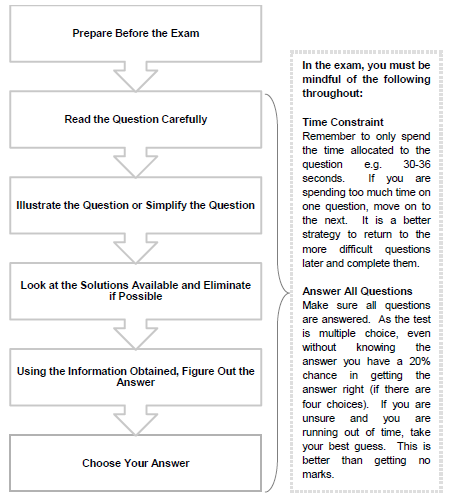
There are different approaches to take for each type of verbal reasoning question. Why? Because each one has unique requirements and having a customized approach for each one means you can move more quickly through the exam.
What are the pitfalls when it comes to verbal reasoning exams with a time limit?
- Taking too long to answer a question.
- Reading the question incorrectly.
- Not having a strategy or an approach.
The key thing to remember with verbal reasoning is that it is logic and there is a definite right answer. For all questions with the exception of synonyms and antonyms, you should have the 'Ah-Ha' moment when you've found the correct answer because there is a logical link back. This is what I mean.
The answer "Ah Ha" ! logical puzzle part 3 fits in with > logical puzzle part 2 fits in with > logical puzzle part 1 relates back to the > question.
In this course, it's about helping you establish the logical links for each type of verbal reasoning question so that you can answer questions more confidently in the exam (and also have an approach).
Now it's time to do your assignment.
- Download the assignment question here.
- Print it out or if you want to do it electronically, save it.
- Complete the questions to it.
- Then check the solutions on the video below.
- If you want the written answers (instead of the video), you can download them here.