8. Angle Transformations
Let's start with the basics of angles. Angles are essentially the slantiness of something .
Below are examples of what angles look like. You don't need to know the names of the types of angles, but that they:
- Measure the degree of things – look at the shaded areas.
- A full angle is 360 and that's the "whole circle".
- They are a fraction of the whole circle.
Within abstract reasoning angles appear quite a bit:
- In shapes – they are a component of a shape transformation. Think about a rhombus (diamond) to a kite.
- In direction and positioning – if you've got something that's moving anticlockwise on each corner of a square, you've got an angle movement of 90 degree each time starting at North West.


In angle transformations we discover a** new type** – when angles change their degree e.g. increasing degree, decreasing degree, repeating degree.
Angles themselves can also form patterns such as:
- Increasing or decreasing by x degrees each time for example, increasing by 45 degrees for each movement or reducing by 90 degrees each time.
- They can fractionalize a full image with their angles by increasing or decreasing the portion available for viewing.
Let's illustrate this with some examples to get your understanding up:
Example 1

Source: http://www.schools.nsw.edu.au/media/downloads/schoolsweb/learning/k\_6assessments/ss/gatest1.pdf
Example 2
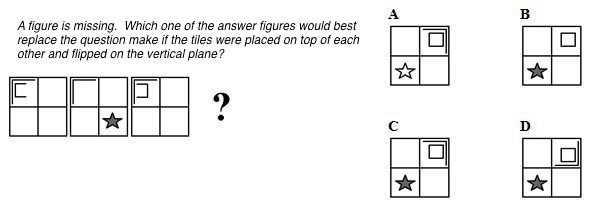
Example 3
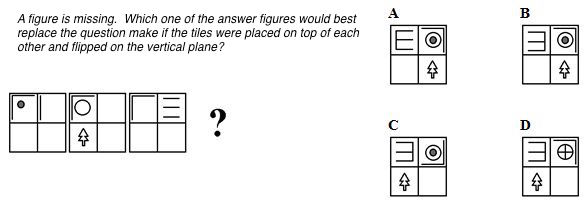
Key Rules to remember:
- Increasing or decreasing by x degrees each time for example, increasing by 45 degrees for each movement or reducing by 90 degrees each time.
- They can fractionalize a full image with their angles by increasing or decreasing the portion available for viewing.
Now it's time to do your assignment.
- Download the assignment question here.
- Print it out or if you want to do it electronically, save it.
- Complete the questions to it.
- Then check the solutions on the video below.
- For the answers in text instead of video, download them here.