3. Shape Transformations
We're going to look at shape transformations as a pattern in this checkpoint. Why?
- Abstract reasoning involves images and they generally utilize shapes.
- One type of pattern that can emerge is how shapes transform.
Let's look at an example.

Let's look at the parts of the whole image (remember the Pumpkin?). The components that make up this particular shape are:
Angles – there are three angles
Sides – there are three sides
Position – it's at 180 degrees
Size – it's regular sized.
How many ways could a 4-sided shape (quadrilateral) transform?
- Parallelogram
- Rectangle
- Square
- Rhombus (diamond)
- Trapezium
- Kite
What are the transformations that occur when a shape changes from:
- Parallelogram to Kite?
- Rectangle to Square?
- Rhombus (diamond) to Kite?
- Trapezium to Parallelogram?
Images are shown below.

It's important to see the shape/image in abstract reasoning as being made up of its parts because that's where the transformations often occurs . Sometimes people don't see this because they are too preoccupied with the shape as a whole to realize that it's transforming.
So… given the component of each shape, let's see how shapes can transform and what you should be looking out for:
- Angles – are the angles increase or decreasing in size e.g. 60 to 90? How have the angles changed? Are they increasing by equal angles?
- Sides – have the sides lengthened, shortened, increase or decreased in number?
- Position – has it rotated? If so by how much? And in which direction (clockwise, anti clockwise)
- Size – is it increasing, decreasing.
Why are we doing this? Well because shape transformations are very common in abstract reasoning and by understanding how they transform in depth you'll be better able to pick it up in the exam – simple as that!
Now let's see some transformations and go through our 4-point checklist to examine in-detail the shape transformation.
Now, let's go through some sample questions:
Example 1
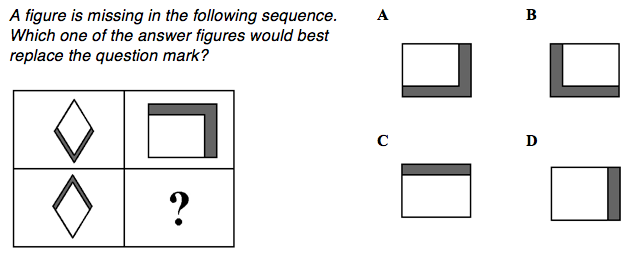
Example 2
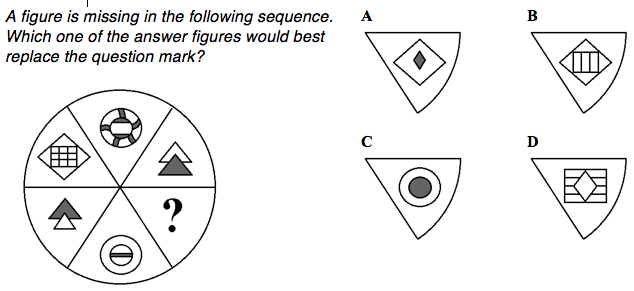
Key Rules to remember:
- Look at the parts of the shape to see if it's changing. Note that changes can occur:
- Angles – are the angles increase or decreasing in size e.g. 60 to 90? How have the angles changed? Are they increasing by equal angles?
- Sides – have the sides lengthened, shortened, increase or decreased in number?
- Position – has it rotated? If so by how much? And in which direction (clockwise, anti clockwise)
- Size – is it increasing, decreasing.
Now it's time to do your assignment.
- Download the assignment question here.
- Print it out or if you want to do it electronically, save it.
- Complete the questions to it.
- Then check the solutions on the video below.
- For the answers in text instead of video, download them here.